


NORTHEAST ORIGINALS
Explore all handwoven tribal artisanal products
Take me there MAD Genius
Made in Northeast India
Stories from the looms, early drops & 5% off your first order.
© 2026 MAD Genius · Made in Northeast India 🌿
M/S MAD GENIUS
GSTIN: 18ACCFM6907E2Z8
Every state in the Northeast has an animal it calls its own. We drew each one in its state's own weave. Here is who they are, and why they matter.
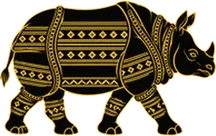
Assam
IUCN Red List: Vulnerable
Assam's pride and the face of Kaziranga, home to about two-thirds of all the world's greater one-horned rhinos. Once pushed close to the edge, it was moved from Endangered to Vulnerable in 2008 after decades of protection. A comeback the whole state is part of.
Woven in the red-bordered gamosa that every Assamese home offers as a mark of respect.
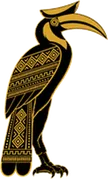
Arunachal Pradesh
IUCN Red List: Vulnerable
Arunachal's state bird and the farmer of the forest: it swallows fruit and drops the seeds far away, planting the jungle as it flies. The Nyishi once crowned their traditional headgear with its casque; today many use replicas, so the birds can stay in the sky.
Woven in the nested diamonds of Idu Mishmi weaving.
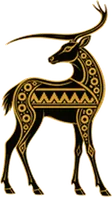
Manipur
IUCN Red List: Endangered
The brow-antlered deer lives in only one place on Earth: Keibul Lamjao, the world's only floating national park, on the drifting grass islands (phumdis) of Loktak Lake. Its light, springing walk on the floating ground earned it the name “dancing deer”.
Woven in the temple-teeth border of the Moirang Phee.
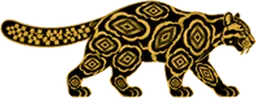
Meghalaya
IUCN Red List: Vulnerable
Named for the cloud-shaped patches on its coat, it is a shy climber of Meghalaya's forests that can even walk head-first down a tree trunk. For its size, it has the longest canine teeth of any living cat.
Woven in the concentric diamonds the Garo call muikron, the eye.
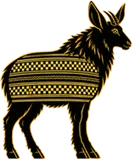
Mizoram
IUCN Red List: Vulnerable
A goat-antelope of steep hills, with big ears and short backward-curving horns. It keeps to rocky, forested slopes where few can follow, fitting for a state built along its ridgelines.
Woven in the Ngotekherh puan: the hruih band and the kherh line.
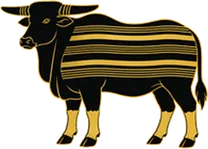
Nagaland
Domesticated, not on the Red List
Across the Naga hills the mithun is a measure of wealth and honour, given at weddings and shared at the Feasts of Merit. It roams the forest freely and comes home to its village.
Woven in everyday Naga stripes: a black ground with yellow and orange lines.
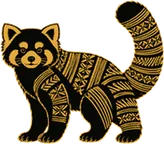
Sikkim
IUCN Red List: Endangered
The original panda, named in 1825, decades before the giant panda. It lives high in Sikkim's bamboo and rhododendron forests, spends most of its life in the trees, and wraps its ringed tail around itself like a scarf in the cold.
Woven in the Lepcha arrow-tip pattern, tsulot-tyet.
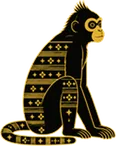
Tripura
IUCN Red List: Endangered
Known in Tripura as the chasma bandor, the “spectacled monkey”, for the white rings around its eyes. A gentle leaf-eater of the treetops and one of the quiet treasures of Tripura's forests.
Woven in the Tripuri risa stripe, with its small stars.
The Northeast is best met in person: in its forests, its markets and its kitchens. If you are planning a visit and want help with anything, where to go, what to see, who to meet, write to us. We're from here, and we'd love to help.
— Mati
Conservation status from the IUCN Red List.
